
The fashion world has its own culture, and we are all involved in our interests and requirements. The ways may differ, but we are all connected, enjoying the various facets of fashion. It’s all creative work that we bring to life with our ideas and beautiful imagination before creating a product. The creation of one product isn’t easy; many hands collaborate, working hard to bring it to fruition.
This article focuses on workers and their creative endeavors. Without a dedicated team, ideas, and hard work, achieving anything is challenging. I’ll also share information about government initiatives that prove invaluable for those connected with this field. Clothes, makeup products, bags, shoes, and numerous other items require the effort of a dedicated team. Just talking about embroidery workers, for example, their work is fabulous. This work is not easy; it requires a lot of patience. Crafting one Kurti piece through hand embroidery takes 2 to 3 days or even more, depending on the designs. They are passionately doing their job. Karigars (workers) pass down this tradition from generation to generation. They educate the next generation to preserve their traditional work. All family members collaborate on embroidery work, completing one product together. Even villages engage in this collective effort.
Embroidery, such as Maggam work in South India, particularly Andhra Pradesh, holds significant popularity. Women like sarees and blouses adorned with Maggam work, especially during marriages and festivals. Young girls often wear half sarees, consisting of a lehenga (long skirt), blouse, and dupatta (scarf), all intricately embroidered. The demand for these handcrafted pieces is high, and workers consistently contribute to this field.

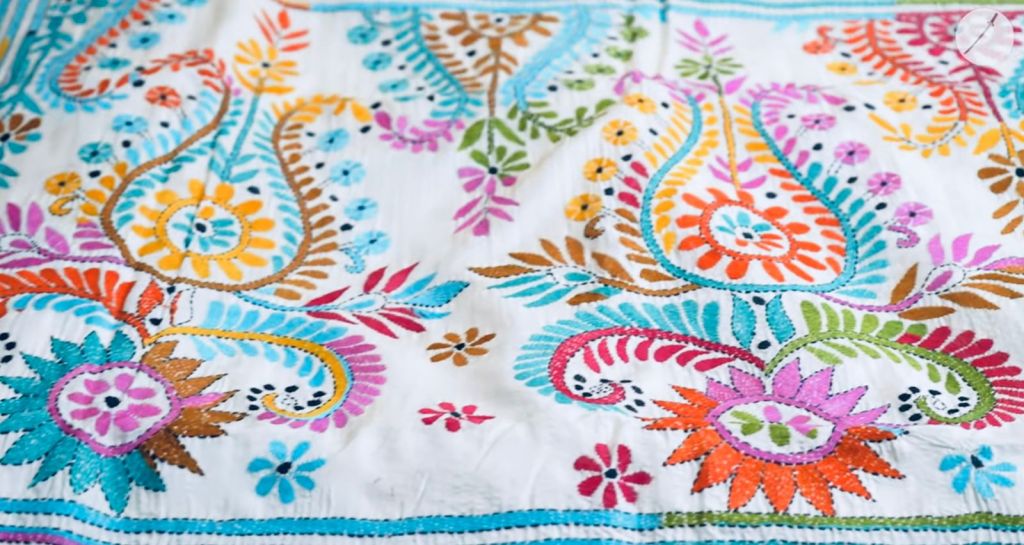
In Bengal, Kantha work stands out, utilizing thread for embroidery, commonly known as Kantha embroidery. Cotton and occasionally silk threads are used for crafting sarees, kurtis, bed sheets, cushions, table runners, kurtas, and other cotton-based items. Cotton sarees like Jamdani and Baluchari, as well as Bengali silk sarees, are popular choices for festivals and marriages. Kantha work, done entirely by hand embroidery, commands a high demand in the market. Skilled workers showcase their culture and traditions through this artistic form.
On one front, creators diligently craft, while on the other, our government not only supports our workers but also safeguards the tradition and beauty of our products, unveiling innovative schemes for the sector’s development.

One District One Product (ODOP) Scheme
The Government of India has launched the ODOP scheme to promote one product from one district. Every state has its specialty in Handloom, craft, food, and other products like mango, potato, litchi, tomato, tapioca, kinnu, bhujia, petha, papad, pickle, millet-based products, fisheries, poultry, meat as well as animal feed among others.
The government encourages entrepreneurship, and creativity, fostering a favorable ecosystem for artisans to thrive, through such collaborations. The ODOP Programme is, thus, aimed at creating sustainable employment at the district level while promoting holistic socio-economic development. The idea is to select, brand, and promote one product from each district of the country.
The ODOP Initiative has identified a total of 1102 products from 761 districts across the country. Detailed information is available on the Government of India website (One District One Product (ODOP)| National Portal of India).
Benefits
- Preservation and development of local craftsman skills and promotion of the art.
- Increase in income and local employment.
- Improvement in product quality and skill development.
- Transforming the products in an artistic way with attractive packaging and branding.
- To connect production with tourism through live demos and sales outlets – gifts and souvenirs.
- To resolve the issues of economic difference and regional imbalance.
- To take the concept of ODOP to national and international levels after successful implementation at the state level.
ODOP in Maharashtra
Every district of Maharashtra has its special product. One District one product scheme will apply to promote every product. Maharashtra state is the hub of textiles, Gems, Gold and Silver jewelry, sarees, towels, and readymade garments. All the information is available in a booklet available at maitri.mahaonline.gov.in/PDF/MHODOPBooklet_23032022.pdf. Some examples of district-specific products are as under:
- Garment and textile- The Thane district is one of the top exporters of garments and textile from Maharashtra state.

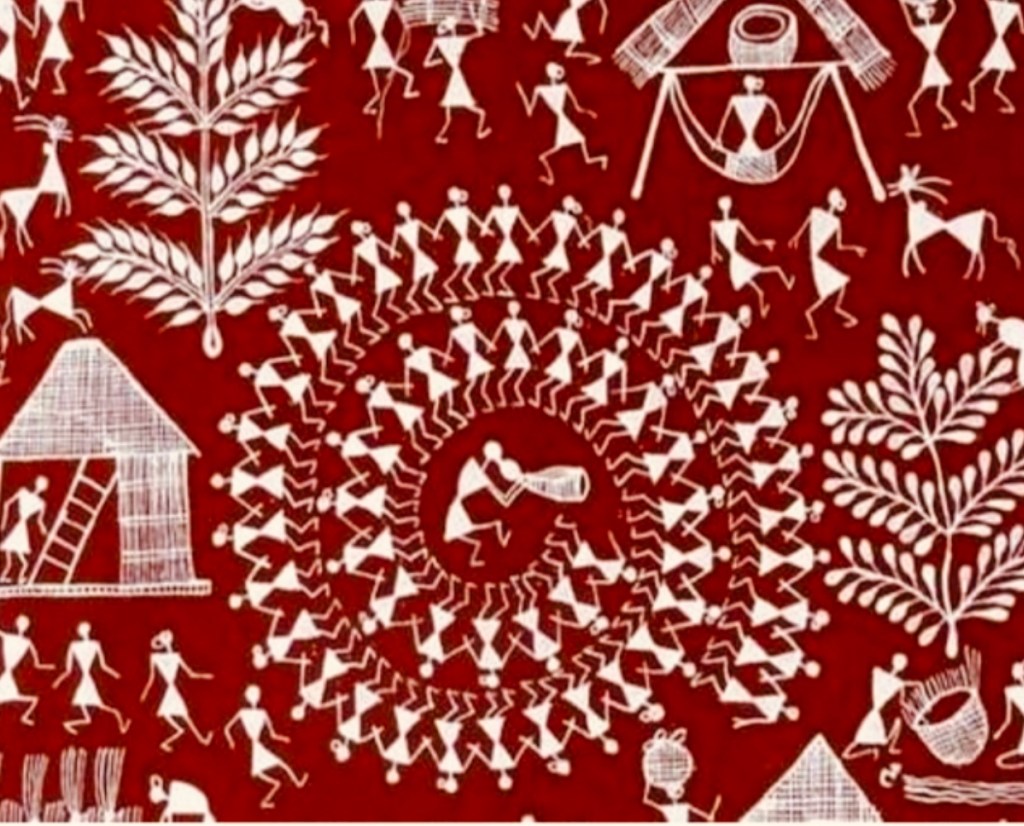
- Warli paintings- Warli paintings got a GI tag in 2014. The Warlis who are Warli painting makers carry on a tradition stretching back to 2500 or 3000 BCE. Warli paintings are a tribal art mainly done by the women folk. The most important aspect of the painting is that it does not depict mythological characters or images of deities but depicts social life. Pictures of human beings and animals, along with scenes from daily life are created in a loose rhythmic pattern. These paintings are drawn for rhythmic patterns. For special occasions such as festivals, harvest, marriage etc.
- Gems and Jewellery- Maharashtra exported gold jewellery worth INR 27227.60 crore in FY 2021-22 (till January 2022), which contributed 75.32% to India’s total gold jewellery export share. Mumbai district exported gold jewellery worth INR 23591 crore in FY 2021-22 (till January 2022), which contributed 87.63% of the State’s total gold jewellery export share. Mumbai district is famous for manufacturing Gold jewellery sets with diamonds, pearls, and precious and semi-precious stones. Zaveri Bazar, is one of Asia’s oldest and biggest jewellery markets in Mumbai with 65% of all gold trading in India estimated to originate from the market. Zaveri Bazar is more focused on handmade jewellery which is traditionally made by Karigars (Artisans). Sewri (Lower Parel) houses larger units which focus more on machine-made jewellery.
- Silver Ornament- Silver jewellery from Hupari in Kolhapur is in great demand in India and abroad. The Kolhapuri Saaj is a specialty of Kolhapur along with Anklets, Kalash, Challa, and Idols in silver articles which are exported to countries like America and Australia. There are around 145 micro-units in the Hupari cluster.
- Kolhapuri Chappal – Kolhapur is one of the largest producers of Kolhapuri chappal (footwear). The chappals are handcrafted, and around 10000 artisans are engaged in manufacturing leather footwear.

- Textile-Ichalkaranji, a city in Kolhapur district, is home to one of the oldest textile industries in India. Kolhapur is also known as the “Manchester of Maharashtra” and is home to nearly 5000 textile factories and is one of India’s largest centres for small-scale industry.
- Solapur Terry Towel- The Solapur Terry towel got GI indication in 2005 and is well known for its unique colour combination and patterns.
- Solapur Chaddar (Bedsheets)- Solapur power looms hold a monopoly regarding Jacquard woven designs and textile production. The dyeing is done in Solapur of the cotton yarn sourced from other states and countries.
- Readymade Garments- The Sangli Readymade Garment industry is highly varied, with hand-spun and hand-woven textiles sectors at one end of the spectrum, while the capital-intensive sophisticated mill sector is on the other end.
- Starch- The Starch produced in the Sangli district helps in the finishing of cloth by acting as a binding agent and increasing the stiffness and flexibility of the fabric thereby supporting the readymade textile industry.
- The Paithani saree and fabrics- The Paithani saree and fabric, hand-woven silk with rich, ornamental zari pallu and border, famous for its uniqueness because of its rich and exclusive designs and motifs such as Kamal (Lotus flower on which Buddha sits or stands), Hans (Swan), and Asawali (flowering vines).
- Himroo shawl- Himroo shawl is a kind of brocaded material woven on a simple throw-shuttle loom with a mix of cotton and silk which are largely grown in Aurangabad district.
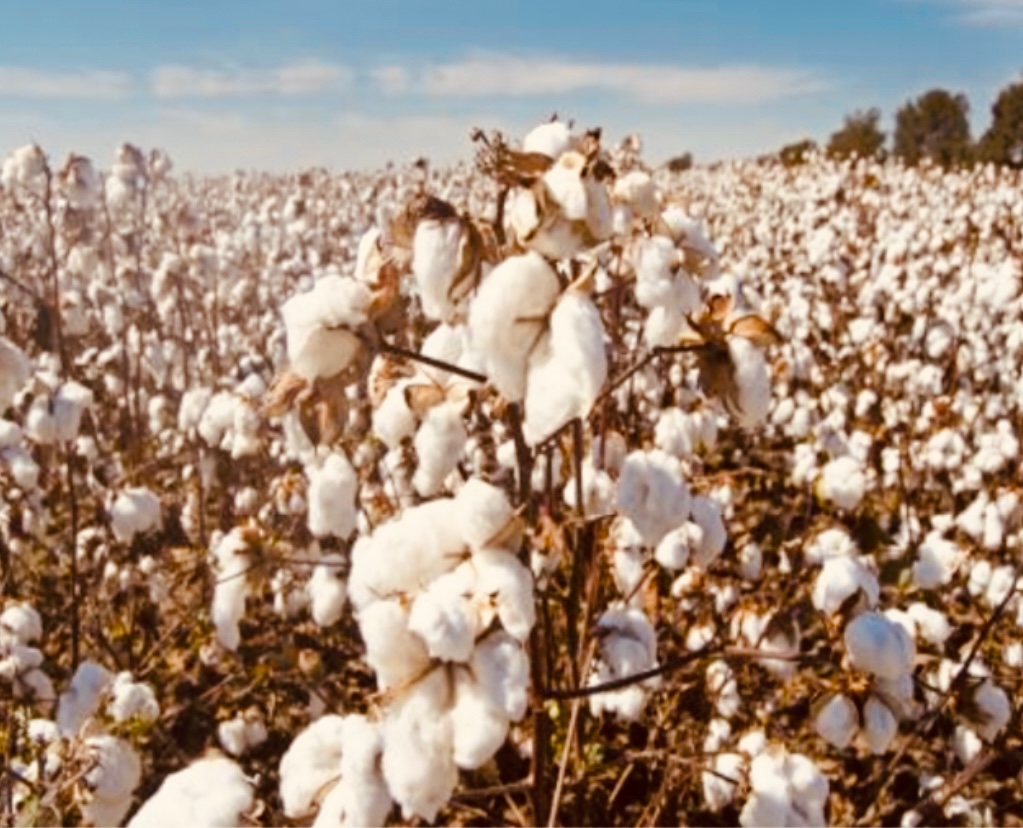
- Cotton- Cotton is the major cash crop of the Yavatmal district and contributes 4% of the total cotton production of the state. The district has a cotton cluster having around 55-unit members and around 60 cotton ginning and pressing mills and 20 oil mills.
- Karvath Kati Saree and fabrics- Karvath Kati saree has originated from Vidarbha region of Maharashtra and is Gl tagged due to its unique saw-edged pattern on the border. This saree is handcrafted using tussar silk, which is sourced from Nagpur, Bhandara and Gondia district. The border of the saree is woven with various temple designs in different sizes, which makes this product unique.

- Cotton and Cotton Seed Oil – Cotton is grown in huge quantities in the Amravati district (around 90,000 MT in FY 2020-21). Amravati has around 100 ginning and pressing factories, and 50 Oil mills producing cotton seed oil, cotton seed oil cake, and soap. Also, there are around 10 cotton yarn manufacturers which produce yarn of export quality. Cotton Seed Oil is used as an edible oil and cotton seed oil cake is used to feed cows and buffalos so that they can yield more milk.
To Sum Up
This blog contains information about the products of a single state. The One District One Product scheme applies to these products as well as many others. The government’s goal is to promote and brand all products on national and international levels to develop the social and economic sectors and create more employment opportunities. Skilled workers will have more opportunities to showcase their art. As sales of various products like sarees, ready-made garments, Kurtis, towels, shoes, bedsheets, and others increase, our fashion industry is set to grow. The intricate handiwork created by skilled workers has a significant opportunity to showcase its art on the international stage. This presents a valuable chance for entrepreneurs and the entire industry to flourish. The government scheme aims to support those in the industry, from small-scale artisans to large enterprises. My objective in writing this article is to share information with individuals connected to this industry, enabling them to reap the benefits of this government initiative. I anticipate a transformative impact on the fashion sector through this scheme. Thank you for reading, and feel free to share any information or suggestions in the comment section.
Sandeep K.
 www.fashiontipsntalk.com
Leave a comment